



Qingdao Cruto Plastic Machinery Co., Ltd. is located in the beautiful and rich Qingdao City, Shandong Province. We specialize in the production of plastic production extruders and down auxiliary equipment. With more than 20 years of experience in plastic machinery manufacturing, with a serious attitude towards customers and a responsible mentality, we absorb the design concepts of European experts and hundreds of experimental data to produce efficient single-screw extruders.
Why Choose Us
Rich Experience
Our company has been in the plastic extruder industry for more than 20 years, has accumulated rich experience, and continuously optimizes its own technology and equipment.
Broad Market
Our products are not only popular in China but also sold to more than a dozen countries overseas, and the companies we cooperate with are all over the world.
High Quality Products
Our products will undergo several product inspections before being sent out to ensure product quality. And we have 100% quality assurance responsibility for our customers, and we will be responsible for any quality problems that arise.
Excellent Service
We have online customer service every day to answer your questions about the product, handling the customer complaint and solve problem for customers. Our customer service will also follow up on product usage.
Artificial Grass Turf Production Line is a cost-effective solution thanks to its high capacity and low tooling cost. This machine is extremely suitable for manufacturing plastic parts that have consistent wall thicknesses. Besides, it can also produce wider and longer profiles compared to those made by other processing methods. In daily life, it's easy to find a lot of extrusion-produced items like plastic pipes, plastic sheets, and plastic profiles.
Advantages of Artificial Grass Turf Production Line
Cost Efficiency
Plastic extruder turf mat making machine stands out predominantly due to its cost-effectiveness. When placed side by side with other manufacturing techniques, especially injection moulding, extrusion demonstrates a clear economic edge. The simplicity of the extrusion process, without any intricate tooling needs, translates to tangible cost reductions. Additionally, the capability of extrusion machines to function uninterruptedly ensures consistent production.
Flexibility
The versatility that extrusion offers is truly unparalleled. The process can seamlessly mould plastic into various shapes and profiles, so long as a uniform cross-section is maintained. This means a vast array of products, from complex shapes to standard sheets and pipes, can be efficiently manufactured using this method. Such freedom empowers industries to innovate and customize as per evolving market demands.
High Production Rate
The absence of breaks in machine operation ensures a steady flow of products, efficiently catering to high-volume demands. This continuous production model aids businesses in maintaining a consistent supply chain, addressing both immediate and future market requirements.
Material Conservation
The malleability of hot plastic before cooling is a pivotal advantage. This intrinsic property permits additional shaping and resizing operations, ensuring optimal material utilization and minimal wastage. Such an approach boasts production efficiency and resonates with sustainability and resource conservation.
Types of Artificial Grass Turf Production Line
Multiscrew Extruder
Planetary roller extruders are capable of intensive mixing due to the rolling action between the planetary screws, sun screw, and the barrel. One advantage of this extruder is that it can process heat-sensitive compounds with only minimal degradation. Rigid or plasticized PVC extrusion is a common application of planetary roller extruder. It can also be integrated into regular extruders to improve their mixing performance.
Disk Extruders
Disk extruders are classified as continuous extruders, but they do not utilize screws to convey the material. Instead, they use disks or drums to facilitate the extrusion process. In some cases, disk extruders are also called screwless extruders. Most disk extruders are operated based on viscous drag transport. Unlike screw extruders, disk extruders are now less common in the industry.
Stepped Disk Extruder
A stepped disk extruder, also known as a slider pad extruder, has a stepped disk placed a small distance from a flat disk. Pressure is generated at the transition of one gap size to another when one of the disks is rotated with a melt in the axial gap. Stepped disk extruders can be used in a continuous process if there is a provision for exit channels in the stepping disk. One major drawback of this extruder is maintainability. The intricate design of the flow channels makes it hard to clean.
Drum Extruder
The drum extruder utilizes a rotating drum and barrel to perform the extrusion process. The polymeric material is fed into the annular space between the drum and the barrel. The material is carried along the circumference of the barrel as the drum rotates. Before the end of one full rotation, there is a wiper bar that scrapes the melt from the drum and directs the flow to the exit and then to the extruder die.
Disk Pack Extruder
Disk pack extruder is capable of basic polymer-processing operations that are as efficient as existing machinery. It has similar features like the single screw extruder and drum extruder. Disk pack extruders can be treated as single screw extruders with zero helix angle and very deep flights. The material is fed in the axial gap between thin disks on the rotating shaft. The melt moves with the disks and before one complete rotation, a channel block closes off the space between the disks. Like the wiper bar in drum extruders, this channel directs the flow to the outlet channel. Mixing blocks and spreading dams can be integrated into the disk pack extruders.
Elastic Melt Extruder
Unlike other disk extruders which operate based on viscous drag transport, elastic melt extruders make use of the elastic properties of polymer melt to move the material and build the required die head pressure. During shearing deformation of the material between stationary and rotating plates, uneven distribution of normal stresses will develop in the melt in all directions. These stresses cause a centripetal pumping action which drives the continuous extrusion of material through a central opening. Due to this mechanism, elastic melt extruders are also commonly referred to as normal stress extruders.
Single Ram Extruder
Ram extruders, also known as plunger extruders, are used in a discontinuous operation. They are simple and tough positive displacement devices that can generate very high pressure.
Ram Extruder
Ram extruders are advantageous in batch operations like injection molding and blow molding. However, this type of extruder also has two major drawbacks, such as its limited melting capacity and poor equal temperature distribution of the melt. One type of ram extruder is the single ram extruder, which is used for general purpose molding. In addition, this is used in extruding ultrahigh molecular weight polyethylene (UHMWPE) or polytetrafluoroethylene (PTPE).
Multi Ram Extruder
Multi ram extruders are designed to operate in a continuous manner. Some designs have four plunger-cylinders –two for plasticating and two for pumping, which are connected by an intricate shuttle valve. Some multi ram extruders, on hand, are designed as twin ram extruders with cylinders in a V-shape.
The Step-by-Step Process of Artificial Grass Turf Production Line
1. Material Preparation
Raw plastic, usually in the form of pellets or granules, is prepared for the extrusion process. You choose a material based on what properties you expect in the final product. Some plastics emphasize strength, flexibility, color, or other properties. Raw plastic material is typically stored in a hopper. It is introduced into the extruder through the feeding opening at the rear end of the barrel. As the plastic pellets descend into the barrel and contact the screw, they also begin to melt.
2. Melting and Mixing
The plastic material is introduced into an extruder, a machine comprising a heated barrel and a rotating screw. The screw within its barrel rotates in a controlled manner but can operate at speeds as high as 120 rpm. As the screw rotates, it advances the plastic beads within the barrel, subjecting them to heat generated by the barrel itself. This heat, combined with the friction induced by the screw's movement, causes the plastic material to melt. Most extrudable plastics melt at around 200 to 275 °C. Upon leaving the screw, the molten plastic passes through a screen pack designed to eliminate contaminants. To withstand pressures that can surpass 34 MPa, a breaker plate reinforces the screens.


3. Extrusion Process
Following the thorough mixing and uniform melting facilitated by the extruder, the molten plastic is pushed through a specially designed die or mold located at the extruder's end. This will give the plastic its final dimensions.
4. Cooling and Sizing
As the plastic material exits the die, it enters a cooling zone. Air- or water-cooling systems often assist during this stage. This removal of heat solidifies the plastic into its final shape. Additionally, sizing tools or equipment may be used to ensure it meets the required dimensions.
5. Hauling and Cutting
The extruded plastic material is pulled or "hauled" through the process using rollers or other mechanisms. This keeps the extrusion moving at the proper speed and tension. After hauling, the continuous extruded profile is cut into specific lengths using cutting tools or saws.
6. Additional Processing
Some extruded items need additional processing. This could include: surface treatments, printing, markings, or attaching other components to the extruded profile.
7. Inspection and Quality Control
The extruded plastic profiles are inspected for defects, dimensional accuracy, and other quality criteria. Any profiles that do not meet the required standards may be rejected or sent for further processing.

Design and Tooling
A quality plastic extruder turf mat making machine will use high-quality, state-of-the-art tooling for all of its extrusion processes. While a plastic extruder turf mat making machine might have these impressive tooling capabilities, will their tools work for your project? Tooling should improve productivity, safety, and efficiency while reducing costs. Working with the right plastic extruder turf mat making machine will ensure they have the tooling that accomplishes these goals and produces a product you are proud of.
Capabilities
Looking at what your plastic extruder turf mat making machine is capable of is crucial to the success of your partnership and your project. If you are in the medical industry, it is important to make sure your plastic extruder has clean room capabilities. Keeping your products sterile to the degree they need is important to the safety of your consumers, and it will protect you from any legal repercussions.
Finishes
Sometimes your products need a little extra touch at the end of the extrusion process. Working with an extruder that has finishing services can save you time and money. If you don't have to find a second manufacturer for your kitting, assembly, or other finishing needs, you can get your product to the shelves faster and with lower manufacturing costs. Having a plastic extruder that has capabilities in thermoforming, off-line punching, metal embedment, ultrasonic welding, packaging, kitting, and routing can save you time and money.
Markets Served
Making sure your plastic extruder turf mat making machine has experience in your specific industry will ensure they can produce the product you need to the highest quality and as efficiently as possible. They will have the materials, tooling, and finishing options that are used within your industry so you don't have to find multiple manufacturing partners.
How to Clean Artificial Grass Turf Production Line
Remove excess plastic and unwanted deposits from your extruder and tooling. We supply bore and hand brushes, copper gauze, and non-scratch scrapers. Die soap and flakes are great time savers for sheet and cast film dies. Fluidized baths can be used for cleaning breaker plates, small tooling and small screws efficiently and without damaging the metallurgical properties of the item being cleaned.
Cleaning your equipment doesn't have to be a dirty or dangerous job if you have the right apparel. Clean the extruder need heat-resistant gloves and sleeves, as well as gloves for a variety of other tasks. We carry cotton canvas gloves, cotton hot mill, standard leather palm, double leather palm, and Kevlar gloves.
Maintaining your machinery and maximizing its productivity requires the right chemical agents. Ease assembly and disassembly of tooling with anti-seize compounds and high temperature grease. Release agents used on tooling can make jobs run easier. Rust preventatives and mold polishes keep your dies ready to go next time you run. Purges help minimize your changeover time and keep your machines making good product.
Keep your extruder, extruder screw, and dies clean with copper gauze. Copper gauze will not scratch or rust and can be used while the machinery is still hot. Our copper gauze is two grades in one: Use outside surface for normal cleaning, or turn inside-out for heaving cleaning. Can be fed directly into extruder hopper of single screw extruders to clean screw and barrel between jobs. Available in rolls of 100 feet or 400 feet, as well as hand pads.
Our Factory
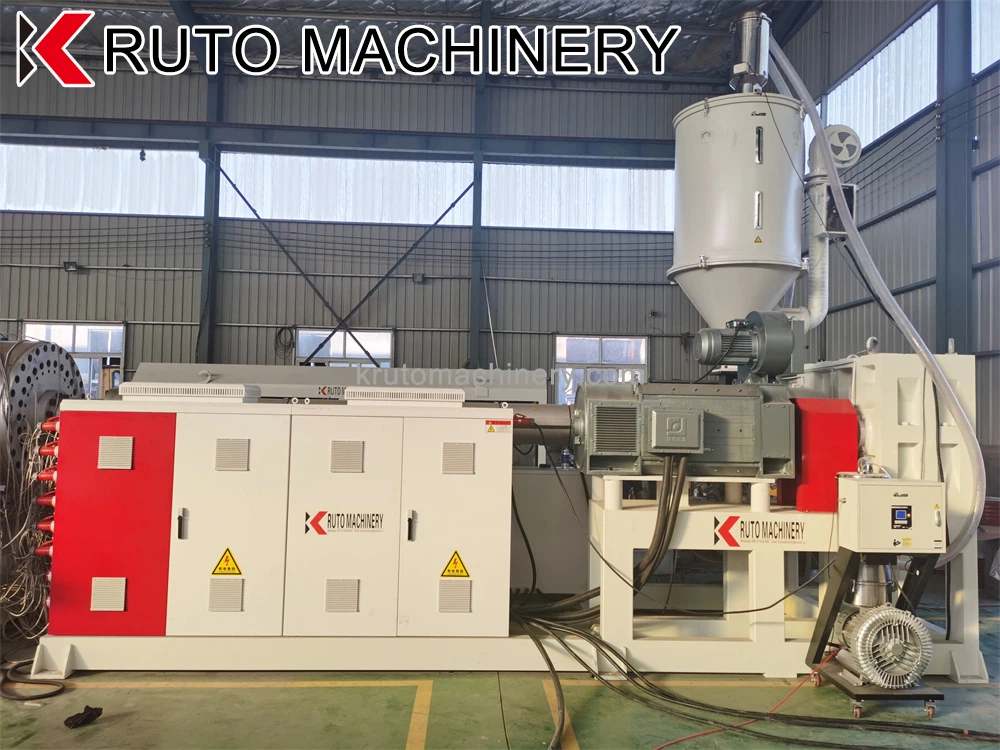
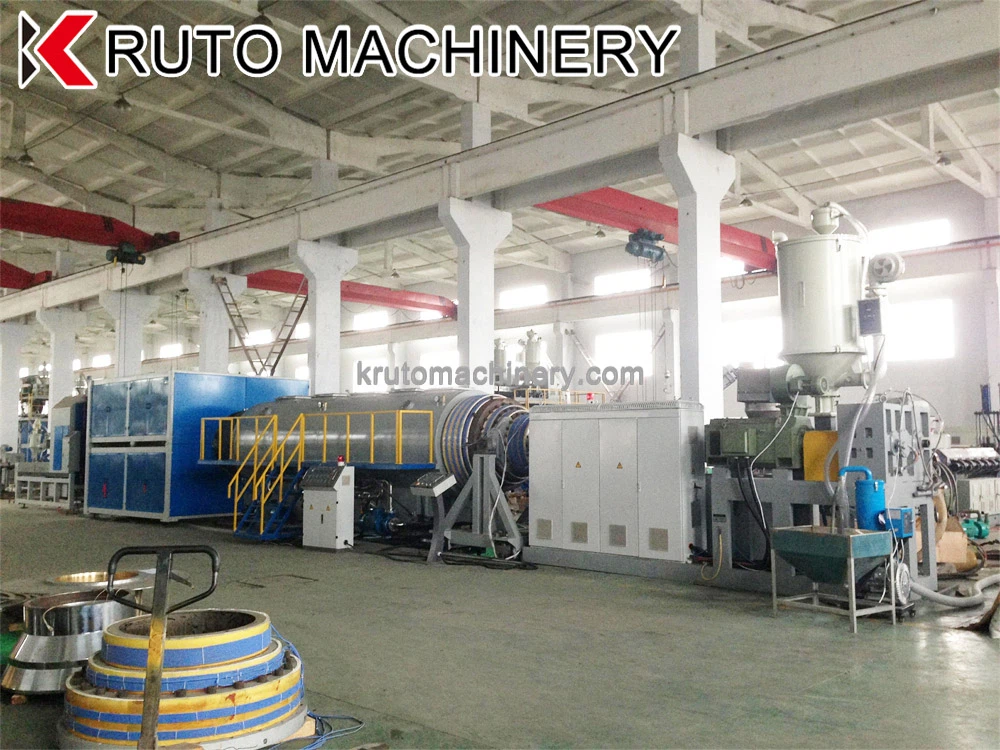
Our factory is strategically located, only 30 minutes away from the airport and port.


Ultimate FAQ Guide to Artificial Grass Turf Production Line
Q: What are the components of plastic extruder turf mat making machine?
Q: What Is the Purpose of Plastic Extruder in Manufacturing?
Q: What Industries That Use Plastic Extruder?
Q: How Does Plastic Extruder Work?
Q: How Accurate Is a Plastic Extruder?
Q: What products are made by plastic extrusion?
Q: What speed are plastic extruder screws?
Q: What is the function of plastic extruder machine?
Q: What is extruder temperature?
Q: How does an extruder heat up?
Q: What causes plastic extruder surging?
Q: How do you lubricate an extruder?
Q: How to loosen a plastic extruder?
Q: What causes plastic extruder to skip?
Qingdao Kruto Plastic Machinery Co., Ltd. is one of the most professional artificial grass turf production line manufacturers and suppliers in China, featured by quality products and good service. Please rest assured to buy customized artificial grass turf production line at competitive price from our factory.
turf mat creation machine with plastic extruder, Grass Turf Sheet Machinery, plastic extruder machine for turf mat fabrication