

The material mixing process is a crucial stage in a plastic mesh production line. As a supplier of Plastic Mesh Production Line, I've witnessed firsthand how this process impacts the quality and performance of the final plastic mesh products. In this blog, I'll delve into the intricacies of the material mixing process in a plastic mesh production line.
Understanding the Basics of Material Mixing in Plastic Mesh Production
Before we dive into the details, it's essential to understand why material mixing is so important. Plastic mesh is made from various polymers, additives, and fillers. These components need to be thoroughly mixed to ensure uniform properties throughout the mesh. A well - mixed material results in a plastic mesh with consistent strength, flexibility, and appearance.
Raw Materials Used
The primary raw material in plastic mesh production is usually a polymer, such as polyethylene (PE), polypropylene (PP), or polyvinyl chloride (PVC). These polymers provide the basic structure and mechanical properties of the mesh. Additives are also added to enhance specific characteristics. For example, UV stabilizers are used to protect the mesh from sunlight degradation, while antioxidants prevent oxidation during processing and use. Fillers, like calcium carbonate, can be added to reduce costs and improve certain properties, such as stiffness.
The Material Mixing Process Steps
1. Material Preparation
The first step in the material mixing process is to prepare the raw materials. This involves weighing the polymers, additives, and fillers according to the specific formulation. Precise weighing is crucial because even a small deviation in the amount of an additive can significantly affect the final properties of the plastic mesh. For instance, an insufficient amount of UV stabilizer may lead to premature aging of the mesh when exposed to sunlight.
2. Dry Mixing
Once the materials are weighed, they are typically dry - mixed in a large container. This initial mixing helps to distribute the additives and fillers evenly among the polymer pellets. A high - speed mixer is often used for this purpose. The mixer rotates at a high speed, causing the materials to tumble and mix. During dry mixing, the static electricity generated can help the additives adhere to the surface of the polymer pellets. However, this static charge needs to be controlled to prevent clumping of the materials.
3. Extrusion and Melting
After dry mixing, the blended materials are fed into an extruder. The extruder is a key component of the plastic mesh production line. Inside the extruder, the materials are heated to a molten state. The temperature is carefully controlled based on the melting point of the polymer. For example, polyethylene has a melting point range of approximately 105 - 137°C, while polypropylene melts at around 160 - 170°C.
As the materials move through the extruder, they are further mixed by the rotating screw. The screw not only conveys the molten material forward but also applies shear forces, which break up any remaining agglomerates and ensure a homogeneous mixture. This continuous mixing during extrusion is vital for achieving a uniform melt with consistent properties.
4. Homogenization
In some cases, an additional homogenization step may be included after extrusion. This can be done using a static mixer or a dynamic mixer. A static mixer consists of a series of stationary mixing elements inside a tube. As the molten plastic passes through these elements, it is repeatedly divided and recombined, further improving the homogeneity of the mixture. A dynamic mixer, on the other hand, has moving parts that actively stir the molten plastic.
Factors Affecting the Material Mixing Process
1. Material Compatibility
The compatibility of the polymers, additives, and fillers is a critical factor. If the materials are not compatible, they may separate during the mixing process or in the final product. For example, some polymers have different polarities, and if they are mixed without proper compatibilizers, they may form distinct phases, leading to weak spots in the plastic mesh.
2. Mixing Time and Speed
The time and speed of mixing also play important roles. Insufficient mixing time may result in an uneven distribution of additives, while excessive mixing can cause degradation of the polymers due to over - shearing and over - heating. The optimal mixing time and speed depend on the type of materials, the size of the mixer, and the specific requirements of the plastic mesh.
3. Temperature
Temperature control is essential throughout the material mixing process. In the extruder, the temperature needs to be high enough to melt the polymers but not so high that it causes thermal degradation. Different polymers have different temperature sensitivities. For example, PVC is more prone to thermal degradation than PE or PP, so the extrusion temperature for PVC needs to be carefully regulated.
Quality Control in the Material Mixing Process
To ensure the quality of the material mixing process, several quality control measures are implemented.
1. Sampling and Testing
Regular samples are taken from the mixed materials at various stages of the process. These samples are then tested for properties such as melt flow index, density, and mechanical strength. The melt flow index indicates the flowability of the molten plastic, which is related to its molecular weight and viscosity. Density can provide information about the uniformity of the mixture, as any significant variation in density may indicate uneven distribution of fillers or additives.
2. Visual Inspection
Visual inspection is also an important quality control method. The mixed materials are inspected for any signs of agglomerates, discoloration, or other defects. A uniform color and texture are indicators of a well - mixed material.
Applications of Well - Mixed Plastic Mesh
Well - mixed plastic mesh has a wide range of applications. For example, 3D Geonet Extrusion Machine produces 3D geonets, which are often used in civil engineering for drainage and soil stabilization. The uniform properties of the plastic mesh ensure reliable performance in these applications. Another application is in erosion control. The Erosion Control 3D Geomat Production Line uses well - mixed plastic mesh to create geotextiles that prevent soil erosion on slopes and riverbanks.
Conclusion
The material mixing process in a plastic mesh production line is a complex and critical operation. It involves careful preparation of raw materials, precise mixing, and strict quality control. As a supplier of plastic mesh production lines, we understand the importance of getting this process right. A well - mixed material is the foundation for high - quality plastic mesh products that meet the diverse needs of our customers.

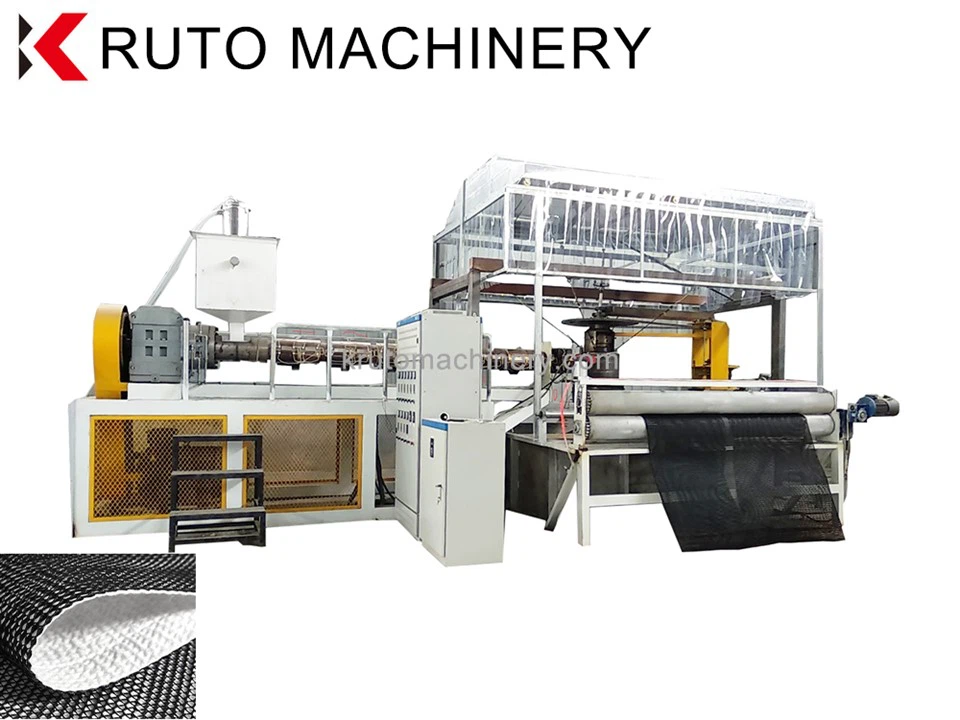
If you're interested in learning more about our plastic mesh production lines or have specific requirements for your plastic mesh manufacturing, we'd love to have a discussion with you. Contact us to start a conversation about how we can meet your production needs and help you produce top - notch plastic mesh products.
References
- "Plastics Extrusion Technology" by Allan A. Griff.
- "Handbook of Polymer Blends and Composites" by D. Bhattacharyya and M. Misra.