

Hey there! As a supplier of Plastic Extruder Turf Mat Making Lines, I've seen firsthand how crucial it is to optimize the extrusion speed. In this blog, I'll share some tips and tricks on how you can do just that.
First off, let's talk about why optimizing extrusion speed matters. When you're running a Plastic Extruder Turf Mat Making Line, time is money. The faster you can extrude the plastic, the more turf mats you can produce in a given period. This means higher productivity and potentially more profit. But it's not just about speed; you also need to maintain the quality of the turf mats. If you push the extrusion speed too high, you might end up with defects like uneven thickness, poor surface finish, or even structural weaknesses in the mats.
So, how do you find that sweet spot between speed and quality? Well, it all starts with understanding the factors that affect extrusion speed.
1. Material Properties
The type of plastic you're using plays a huge role in determining the optimal extrusion speed. Different plastics have different melting points, viscosities, and flow characteristics. For example, polyethylene (PE) is a common material used in turf mat production. It has a relatively low melting point and good flow properties, which means it can generally be extruded at a higher speed compared to some other plastics.
When you're selecting the plastic for your turf mat production, make sure to choose a grade that is suitable for high - speed extrusion. You can also work with your material supplier to get recommendations on the best plastic for your specific application.
2. Screw Design
The screw in the extruder is like the heart of the machine. It's responsible for melting, mixing, and pumping the plastic through the die. The design of the screw can significantly impact the extrusion speed. A screw with a larger diameter and a higher compression ratio can generally handle more plastic and push it through the system faster.
However, changing the screw design is not always a straightforward process. It requires careful consideration of the overall extruder setup and the material you're using. If you're not sure whether a screw change is right for you, you can consult with a technical expert or your extruder manufacturer.
3. Temperature Control
Temperature is another critical factor in extrusion speed optimization. The plastic needs to be heated to the right temperature to achieve the proper viscosity for extrusion. If the temperature is too low, the plastic will be too viscous and difficult to extrude, which will slow down the process. On the other hand, if the temperature is too high, the plastic might degrade, leading to quality issues.

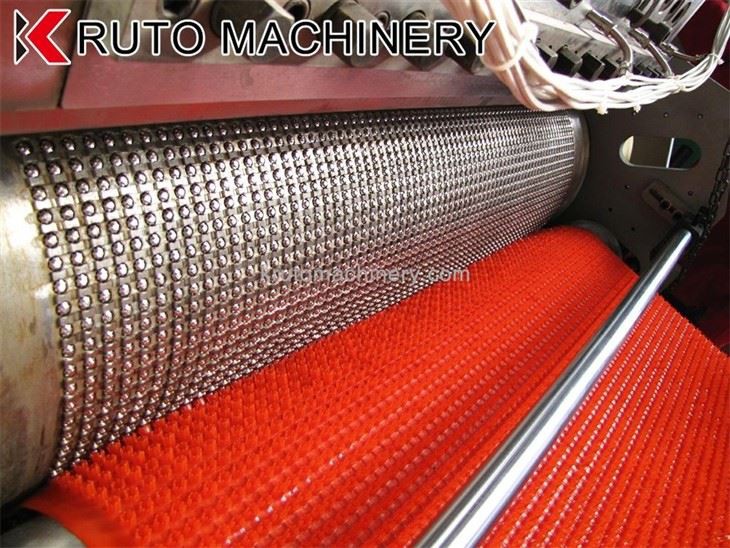
Most modern extruders come with sophisticated temperature control systems. You need to set the temperature zones in the extruder according to the material's requirements. Regularly monitor the temperature during the extrusion process and make adjustments as needed.
4. Die Design
The die is the part of the extruder that shapes the plastic into the desired form, in this case, the turf mat. The design of the die can affect the flow of the plastic and, consequently, the extrusion speed. A well - designed die will ensure a uniform flow of plastic, which allows for higher extrusion speeds without sacrificing quality.
If you're experiencing issues with uneven flow or slow extrusion speed, it might be worth having a look at your die design. You can work with a die manufacturer to optimize the die for your specific production requirements.
5. Equipment Maintenance
A well - maintained extruder is more likely to operate at an optimal speed. Regular maintenance tasks such as cleaning the screw, checking the heaters, and lubricating the moving parts can prevent breakdowns and ensure smooth operation.
Neglecting maintenance can lead to problems like clogged screws, worn - out parts, and inconsistent temperature control, all of which can slow down the extrusion process. Make sure to follow the manufacturer's recommended maintenance schedule for your Plastic Extruder Turf Mat Making Line.
Testing and Optimization
Once you've considered all these factors, it's time to start testing. You can run a series of trial runs at different extrusion speeds and record the results. Look for signs of quality issues such as surface defects, thickness variations, or structural problems in the turf mats.
Start with a relatively low speed and gradually increase it while monitoring the quality. Take notes on the optimal settings for each material and production condition. Over time, you'll build up a database of best practices that you can refer to for future production runs.
Using Our Production Lines
If you're in the market for a new Plastic Extruder Turf Mat Making Line, we've got some great options for you. Check out our Pe Plastic Grass Mat Production Line, PE Turf Doormat Production Line, and Plastic Grass Mat Production Line. These lines are designed with the latest technology to help you achieve optimal extrusion speeds and high - quality turf mat production.
We're always here to support you in optimizing your production process. Whether you need help with equipment selection, technical advice, or troubleshooting, our team of experts is ready to assist. If you're interested in learning more about our products or have any questions about optimizing extrusion speed, don't hesitate to reach out. We're looking forward to discussing your specific needs and helping you take your turf mat production to the next level.
References
- "Plastics Extrusion Technology" by Christopher Rauwendaal
- "Handbook of Plastic Extrusion Technology" by John F. Carley